What is Piano Regulation and Why Does it Matter?
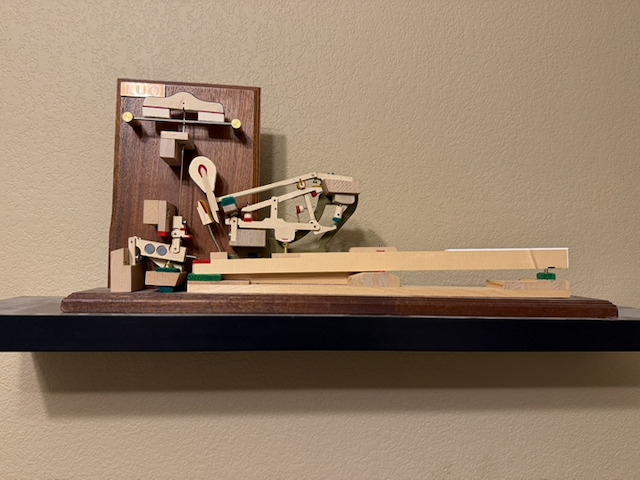
Does your piano feel sluggish? Does your piano feel heavy. Do you find that you cannot play quietly? Do you feel like you are pressing into rocks at the bottom of the key rather than a soft cushion? Do some keys stick or return slowly? Does it feel like you're fighting the instrument instead of playing it?
If so, your piano might not need tuning. It might need regulation.
I know — "regulation" sounds like something a government agency does to breakfast cereal. But in the piano world, it's one of the most important services your instrument can receive. And most piano owners have never heard of it.
Tuning Is for Your Ears. Regulation Is for Your Hands (mostly).
Here's a distinction worth understanding: tuning addresses sound, regulation addresses touch and control.
When a piano is tuned, I adjust the tension of each string to bring it to the correct pitch. It's entirely about what you hear.
Regulation is different. It's the process of adjusting the hundreds of moving mechanical parts inside the piano's action — the intricate assembly of levers, springs, hammers, and felt that translates your finger pressing a key into a hammer hitting a string just so. When those parts fall out of alignment, the piano feels off. It might be unresponsive, uneven, or just plain tired.
A good analogy: regulation is to a piano what a tune-up is to a car. The car isn't broken — it starts, it drives — but it's not performing at its best. Fuel efficiency is down. It hesitates at the wrong moments. A tune-up brings it back. Regulation does the same thing for your piano's action.
There Are a Lot of Moving Parts (No, Really)
A typical piano action contains around 10,000 individual parts. For every single key, there is a small army of components — levers, springs, flanges, dampers, felts — all working together in a precise sequence to make something musical happen.
And every one of those parts can drift out of adjustment over time. Felt compresses. Wood swells and shrinks with the seasons. Pins wear. Springs weaken. The Sacramento Valley climate, with its dry summers and wet winters, makes this worse than you might expect.
Here's a taste of what gets adjusted during a regulation:
Key height and leveling. Every key should sit at the same height. If a few keys are sitting higher or lower than their neighbors, you're going to feel it — and so will anyone who plays scales. Uneven keys are one of the most common complaints I hear, and it's a regulation issue, not a tuning issue.
Key dip. This is how far a key travels when fully depressed. Too shallow and the action feels abrupt. Too deep and it feels sluggish and slow to reset. It's a small measurement — we're talking fractions of an inch — but you'll feel the difference immediately.
Let-off. This is the point at which the hammer is released and travels to the string on its own momentum. Get it wrong and you lose dynamic control — particularly the ability to play softly. For serious players, let-off adjustment is one of the most important steps in the whole process. For everyone else, it's the reason a well-regulated piano lets you whisper a note instead of just shouting them.
Drop. After the hammer strikes the string, it needs to fall back just the right amount to allow fast repetition. Think about trill playing or rapid passages — if the drop isn't set correctly, the action won't reset fast enough and notes don’t play. Embarrassing at best.
Lubrication. All those moving parts rotate on pins. Without proper lubrication, you get sluggishness, squeaks, and accelerated wear. This is the kind of thing that quietly gets worse over years without anyone noticing — until they play a well-regulated piano and wonder why theirs suddenly feels like it's full of sand.
Hammer resurfacing. Over time, the felt hammers get grooved from hitting strings thousands of times. They also harden, which produces a bright, harsh tone. Resurfacing restores the shape and softens the tone back to something musical. Reshaping hammers require revoicing which are not typical of an action regulation.
Who Needs Regulation?
Serious players notice a regulation problem almost immediately. Uneven key weight, slow action, a hammer that won't repeat cleanly — these things are glaring if you play every day.
But even casual players feel the difference, even if they can't name it. "The piano feels heavy." "Some keys feel stiff." "It's not as fun to play as it used to be." That's usually regulation.
New pianos often need regulation after the first year or two as the action settles in. Older pianos that have been played regularly for decades are prime candidates. And if a piano has been sitting unplayed in a dry Sacramento garage for the last fifteen years — well, let's just say regulation is probably overdue if it’s even possible.
The Short Version
If your piano sounds fine but feels wrong, regulation is likely the answer. It's not a glamorous service — nobody's posting regulation videos to Instagram — but it's the difference between a piano that merely works and a piano that's genuinely enjoyable to play.
One of my greatest delights is to see the faces of pianists who touch their instrument for the first time after a good regulation. They smile and start to play. They find that they can play in a way that simply could not do before. I just finished a regulation of a grand piano that was to be used for a concert in a retirement center. The accompanist refused to play it. He said it was unplayable. After regulation, he was delighted with the result and thus, so was I.
Ready to find out what your piano is actually capable of? Give me a call at 916-261-2419, email tombrantigan@gmail.com, or reach out through the contact page. I'd be happy to take a look.