Tom’s Blog
Honest opinions from someone who has done this for many years.
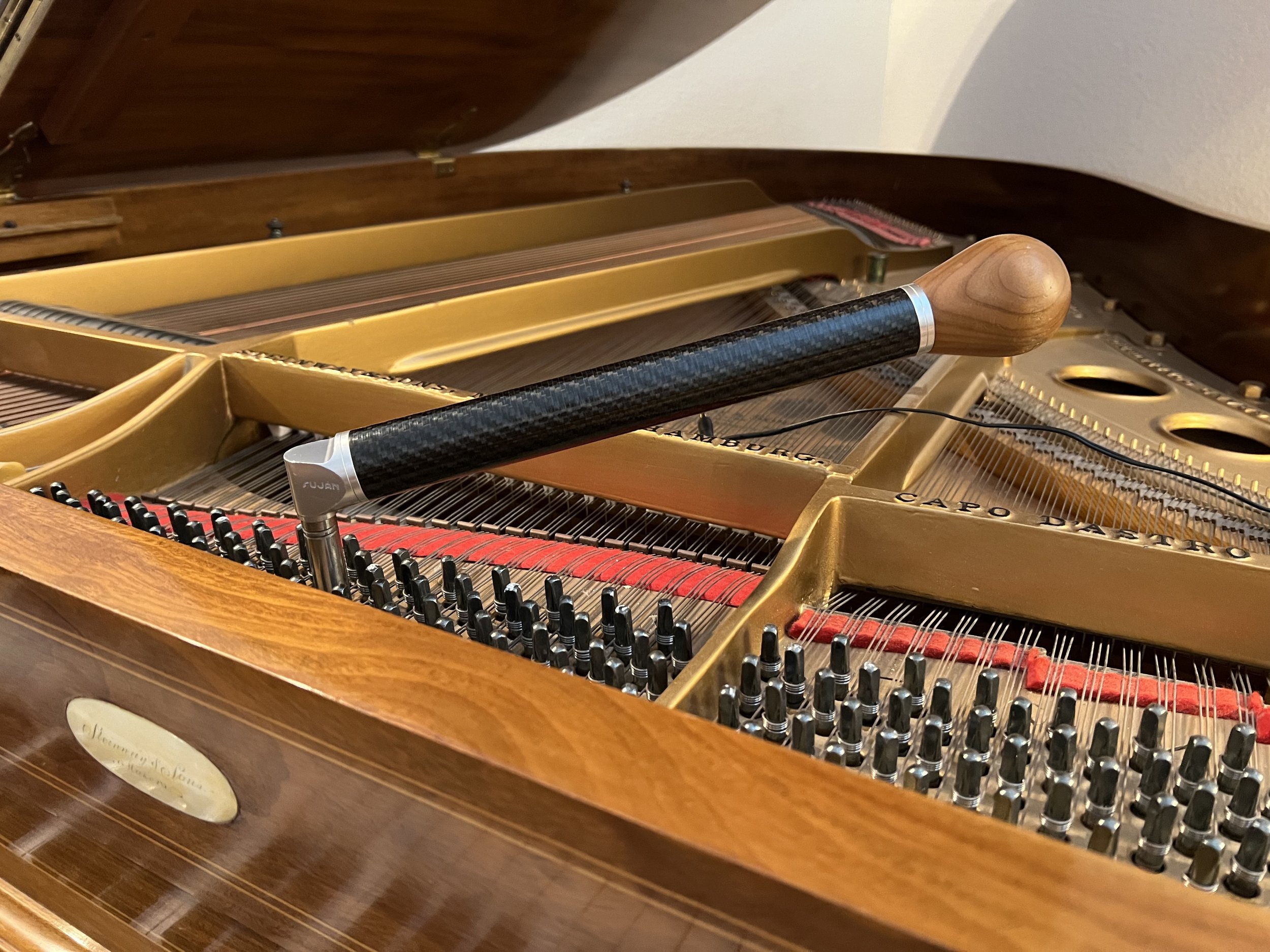
I am a professional piano technician. I drive to your house, open your piano lid, and spend a couple of hours doing something that looks suspiciously like just turning small bolts while occasionally playing the same note thirty times. I am a member of the Piano Technician’s Guild so I take my craft seriously and continue to study. At the same time, I look at my work as being a lot of fun. I meet new people and pianos new to me.
I have been doing this for a long time - 50+ years since my time at Northwestern University where I ran out of music degrees and they told me I had to get a job. I am a practicing musician so I know how a piano should sound and should feel.
This blog is intended to educate the piano owner, from the rank beginner to the professional who is just curious about what I think about different topics. I will talk about tuning, the cost of tuning, the process of tuning, regulation, what you can and can’t expect from regulation, whether equal temperament is the best or at worst a standard compromise. We’ll see how this develops.
This should be fun and I hope you enjoy what you read and will send me your comments at tombrantigan@gmail.com or call me to set up an appointment for tuning or repair, or even fill out a contact message..
Scroll Down
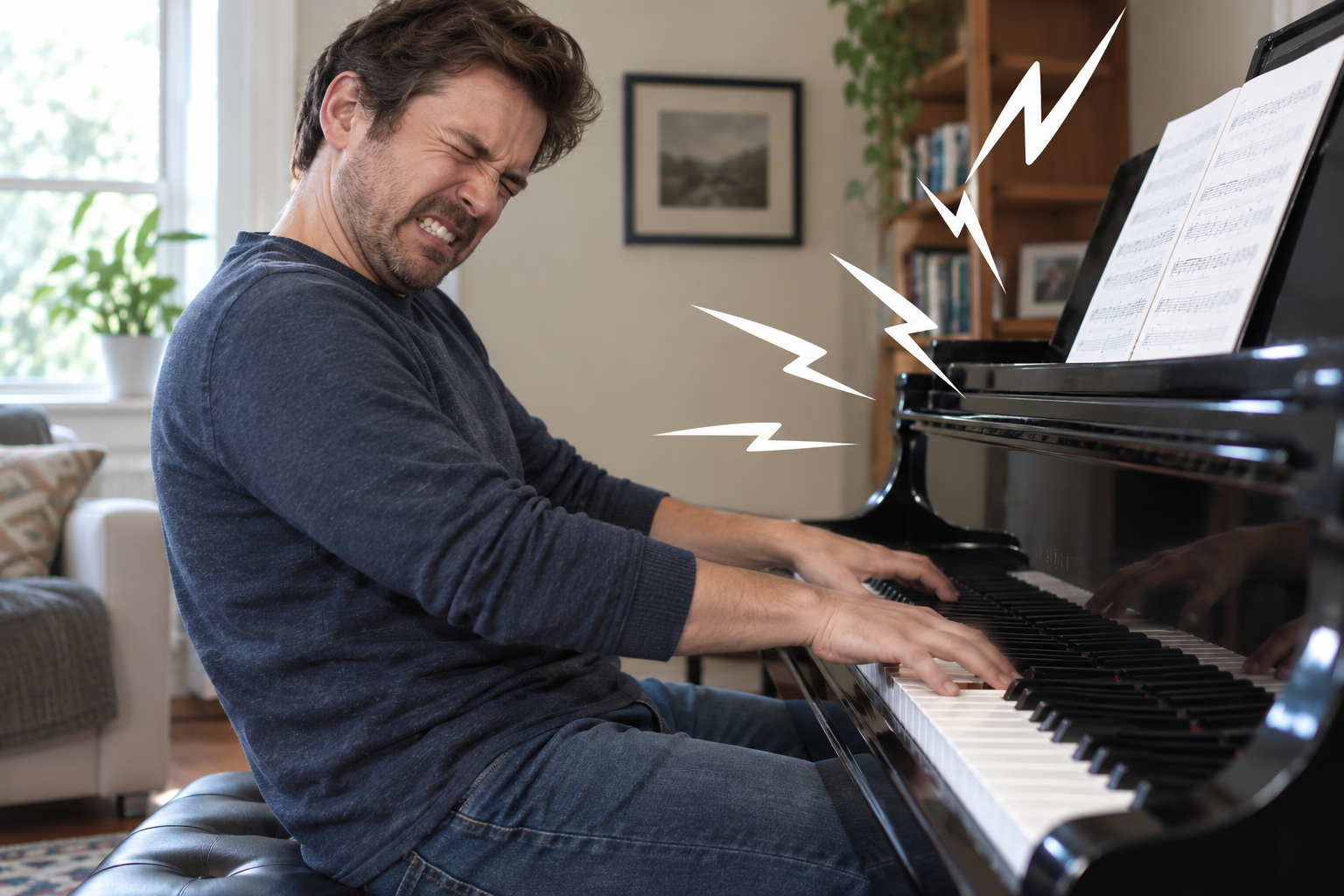
It’s too loud!
"It's too loud!" is one of the most common things I hear when I open a piano lid. Sometimes it's a parent whose teenager's practice rattles the whole house. Sometimes it's a pianist who says the top octaves have turned glassy and piercing, or that the piano "shouts" no matter how gently they play.
Sometimes it’s a brand new piano that sounded OK in the shop but now that it’s in my house it is just too loud for the space.
The good news: a piano's tone is not fixed. Much of what you hear is shaped by a small part of the instrument you may never have looked at, and a technician can adjust it. That adjustment is called voicing, and this post explains what it is, why pianos drift toward brightness over the years, and what can and can't be done about it.
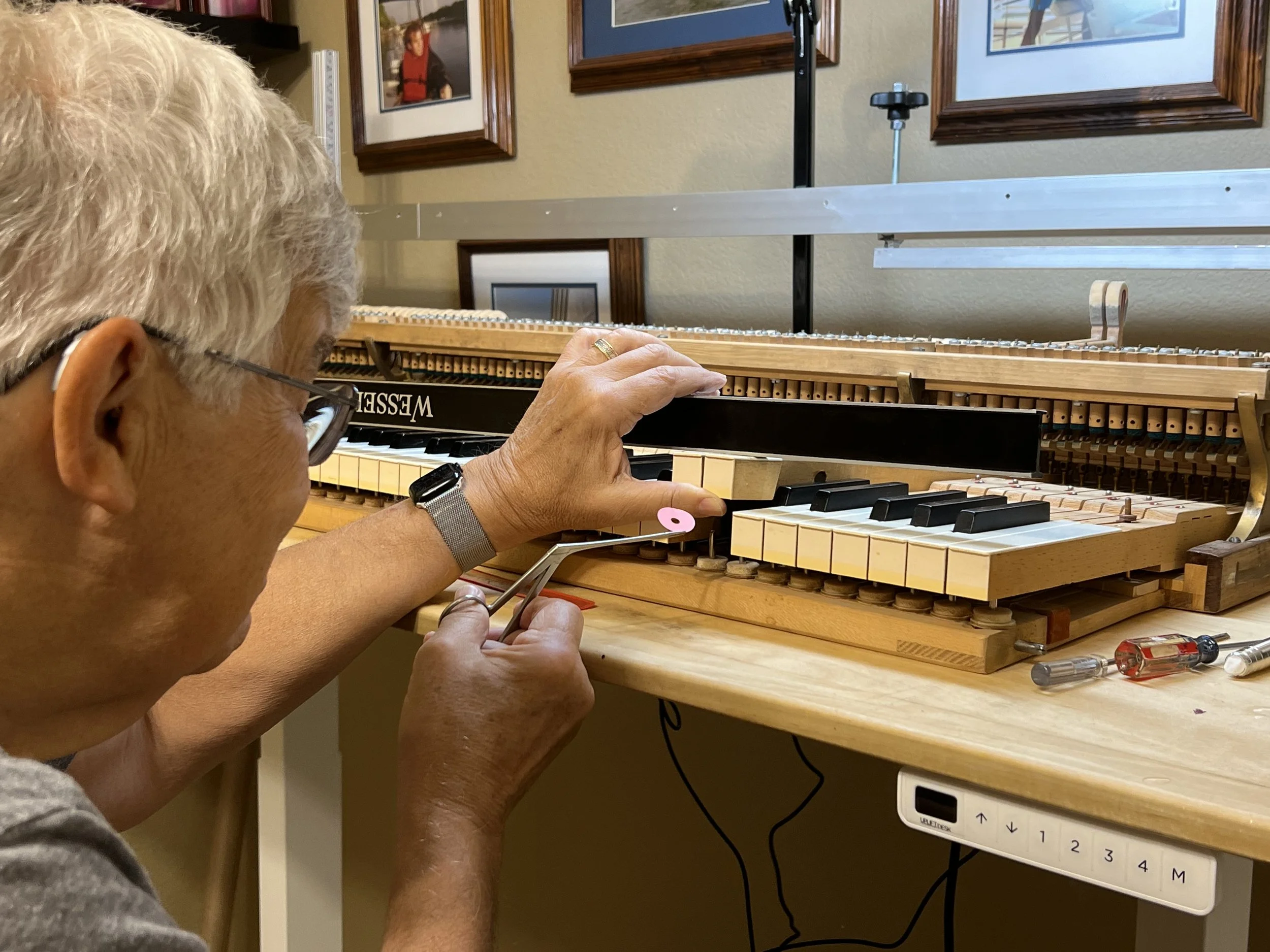
Is Your Grand Piano Asking for Regulation? Signs to Watch For
If your grand piano is in tune but still feels uneven, heavy, or hard to control, it probably needs regulation. Tuning fixes pitch. Regulation fixes how the piano responds to your fingers.
A grand piano action has thousands of parts, dozens behind every key: wood levers, felt cushions, cloth bushings, springs, and hammers. Each key has dozens of adjustments that must work together to a fraction of a millimeter. Regulation is the process of measuring and resetting all of them, so every key behaves correctly and in the same way.
But how do you know when this would benefit your own piano?
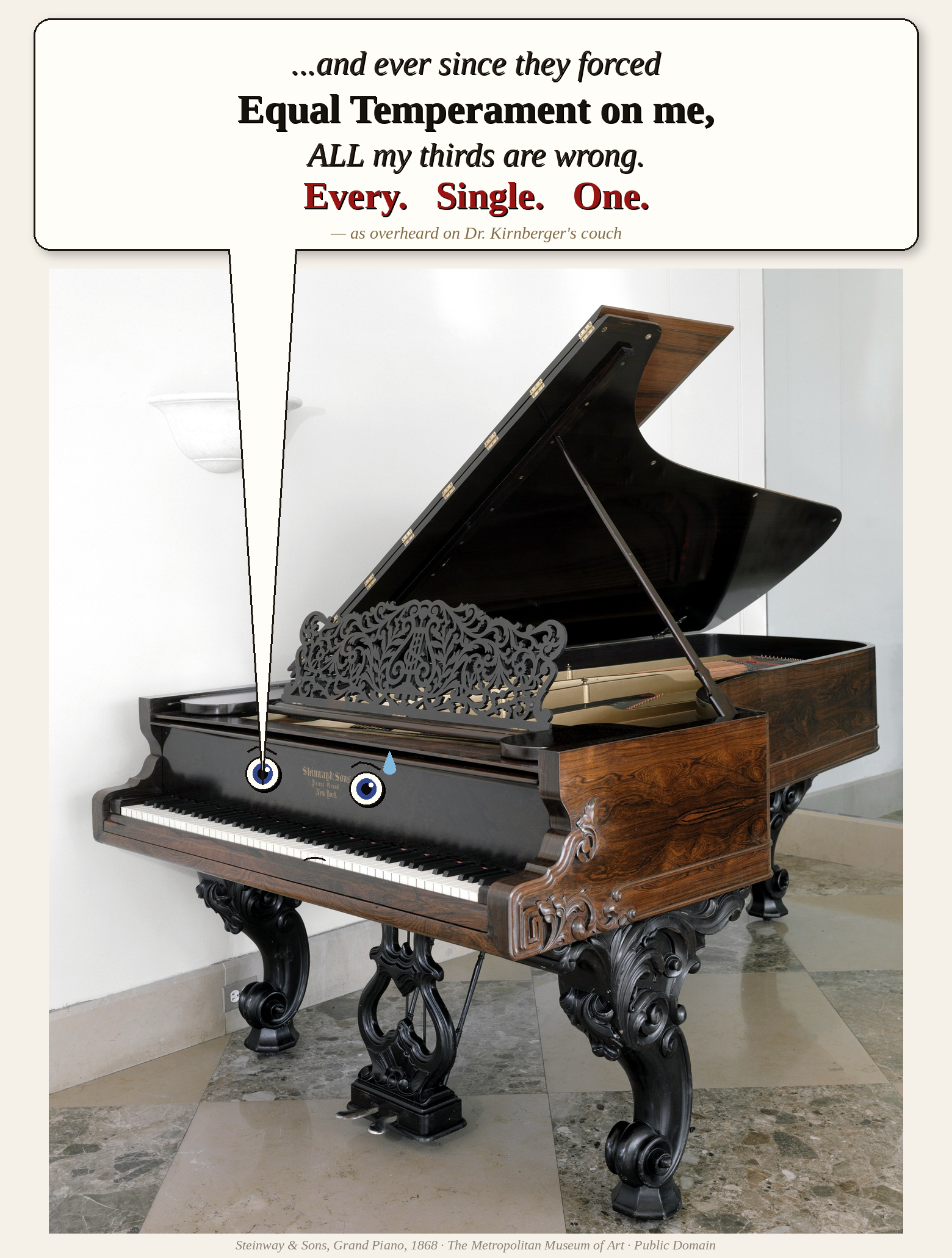
The Lie We Tuned Into
Equal temperament makes every key equally tolerable — and equally colorless. Here's what we gave up, why Bach and Chopin heard something entirely different, and why it still matters.
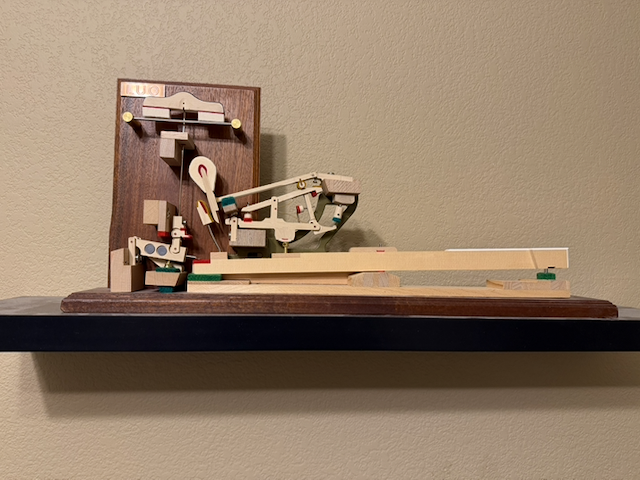
What is Piano Regulation and Why Does it Matter?
Does your piano feel sluggish? Does your piano feel heavy. Do you find that you cannot play quietly? Do you feel like you are pressing into rocks at the bottom of the key rather than a soft cushion? Do some keys stick or return slowly? Does it feel like you're fighting the instrument instead of playing it?
If so, your piano might not need tuning. It might need regulation.
So, how much should tuning cost?
Everyone wants to know and everyone has a right to know what it will cost to tune their piano. This post will discuss the typical ranges for tuning services in the Folsom and Sacramento region as of 2026. You will learn what to expect and what to avoid.